Sector 32256
Viking Hood Starved of Air in Deerwood
Late-model southside houses built tight, where a big blower has nowhere to draw make-up air from and one kitchen carries five separate systems.
Independent Viking kitchen appliances only
Mon–Fri, 8am–6pm Sat, 9am–4pm
Wall Ovens
Elements that open up, sensors out of range, and doors that will not stay square. Single and double wall ovens, built in.
Symptoms we get called for
A built-in wall oven is harder to service than a range for one reason: it lives inside cabinetry. Everything that matters is behind a face that has to come out of a hole it was fitted into, sometimes twenty years ago, sometimes by someone who ran the trim tight to the frame. Half the skill in this job is getting the unit out without wrecking the cabinet.
Bake and broil elements open up. That is the single most common wall oven failure and it is a straightforward diagnosis: a resistance check across the terminals tells you in ten seconds whether the element is a conductor or an ornament. An element that glows at one end and not the other has usually already failed and is arcing through a partial break.
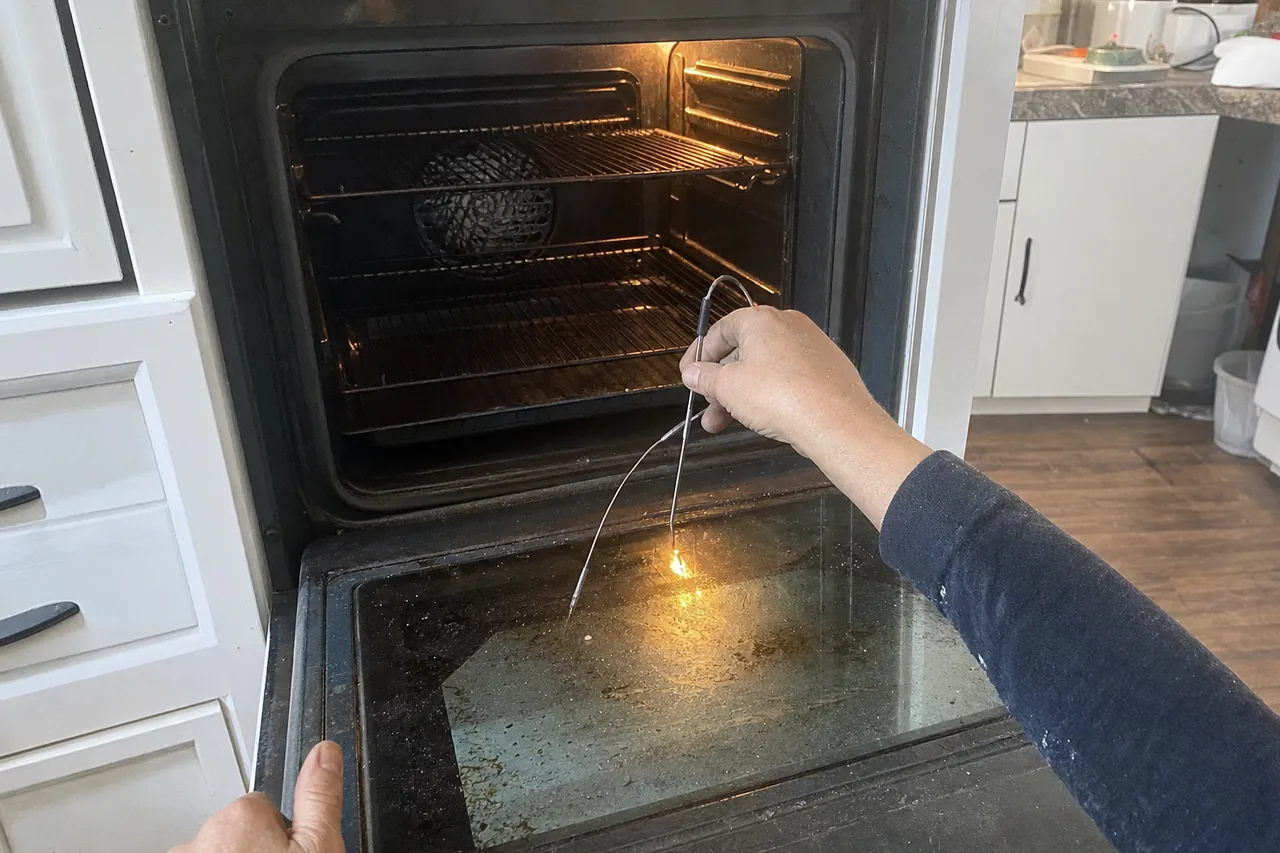
Temperature sensors drift out of range. These are resistance devices, and a known-good one reads a predictable value at room temperature. When it reads high the control thinks the cavity is hotter than it is and shuts the heat off early. The symptom is an oven that preheats forever and never gets there. The customer usually blames the board. It is almost always the sensor.
Door hinges take the whole weight of a heavy glass door for years. When they weaken, the door drops, the latch misses, and the self-clean cycle refuses to start because the lock switch never confirms. That is a mechanical fix, and it must be done in pairs — replacing one hinge on a two-hinge door leaves you with a door that is still crooked, just in a different direction.
A double stack shares a single control assembly and often a single power feed, but has two independent element circuits and two independent sensors. When the bottom cavity is dead and the top one is fine, the shared parts are proven working by the top cavity. That narrows the problem to the lower element, the lower sensor, or one relay on the board. It is one of the few appliance faults where the machine tells you where to look if you read it properly.
Pyrolytic cleaning runs the cavity far above normal cooking temperature for hours. That is exactly the condition that finishes off an element already near the end of its life, cooks a marginal sensor, and bakes the door lock motor. A large share of the wall ovens we are called to were working fine until someone ran a clean cycle before a holiday.
If your oven is over ten years old and you have never run self-clean, our honest advice is to keep not running it, and to wipe the cavity by hand instead. We would rather say that than sell you a repair the cycle caused.
Jacksonville gets roughly sixty-eight thunderstorm days in an average year. Electronic oven controls sit on the far end of a long branch circuit with no protection of their own, and a nearby strike does not need to hit the house to put a spike on the line. A control that went dark during a storm is a plausible board failure. A control that has been getting stranger for six months usually is not, and we check the sensor and the wiring harness first either way.
We bring the tools to support a heavy oven at counter height rather than wrestling it. In older Riverside and Avondale kitchens the opening is often an inch short somewhere and the trim has been shimmed to hide it. We work with what is there and we tell you before we start if the unit will not go back into the cabinet without carpentry.
Flat diagnostic, credited toward the repair. Written estimate first. Genuine OEM parts, ninety days on labor and a year on parts.
What it costs
The visit and the whole diagnostic sequence are $80 flat, and that comes off the bill the moment you approve the work. Repairs of this kind have run $200–$970 in parts and labor after that, and the figure on your estimate is written down before a part is ordered.
| Work | Parts and labor |
|---|---|
| $80 diagnostic | Flat, credited toward the repair |
| Oven thermostat or heating element | $200–$570 |
| Control board or touch panel | $410–$970 |
A band is where the work has landed, not a quote. You get a written estimate before any part is ordered or any tool comes out. 90 days on labor, 365 days on parts. The whole table is on the pricing page.
Before you book
Related
Sector 32256
Late-model southside houses built tight, where a big blower has nowhere to draw make-up air from and one kitchen carries five separate systems.
Sector 32205
A professional range in a bungalow kitchen built before the appliance existed. Long duct runs, shared circuits, and floors that have moved for a century.
Sector 32210
A 1900s–1930s peninsula neighborhood where condenser fins, hinge pins and levelling hardware age faster than the same parts four miles inland.
Sector 32223
Large kitchens, island hoods on long duct runs, and a lot of refrigeration installed in garages and lanais the house never cools.
Shop Note 002
A display is not a measurement. Put a probe on the middle rack and watch a full cycle before anyone orders a part.
Shop Note 005
A board that died during a storm and a board that has been getting stranger for months are two different repairs. The history matters.
What customers said
4.3 out of 5, across 77 published customer reviews. Read every one of them.
The cooling fan ran for hours after the oven was switched off. He checked the cutout and the board driving it, replaced the sensor feeding the circuit, and the fan now stops once the cavity is cool.
Octavia F.
The broil element had burned through at one end and left a scorch mark on the liner. New element in, terminals cleaned back to metal, and he checked the bake side for the same damage before he left.
Honora V.
One corner of the touch panel had gone dead and took half the functions with it. He tested the board instead of guessing at it, ordered the right part, and fitted it the morning it landed.
Lavinia E.
Book the visit
Viking only. Duval County, citywide. Flat $80 diagnostic. It is credited toward the repair if you approve the work.